
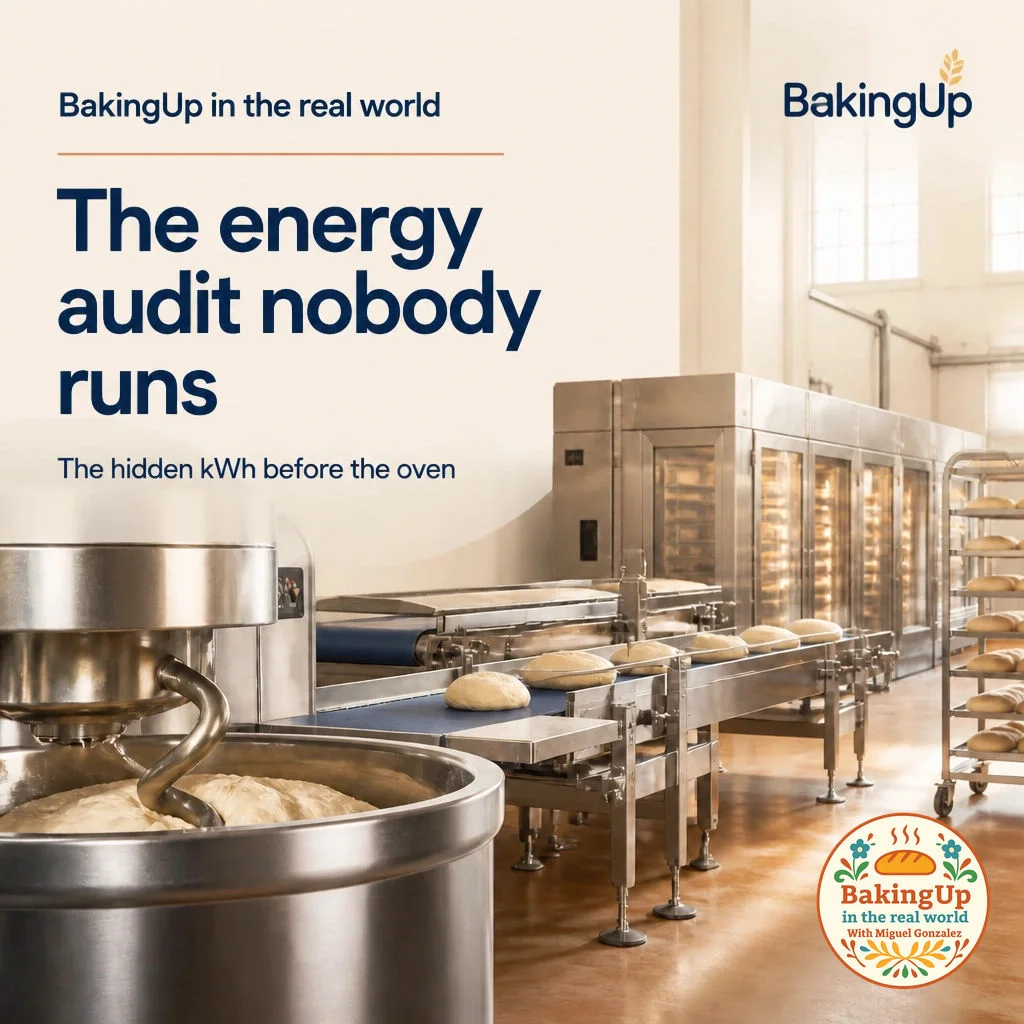
BakingUp in the real world
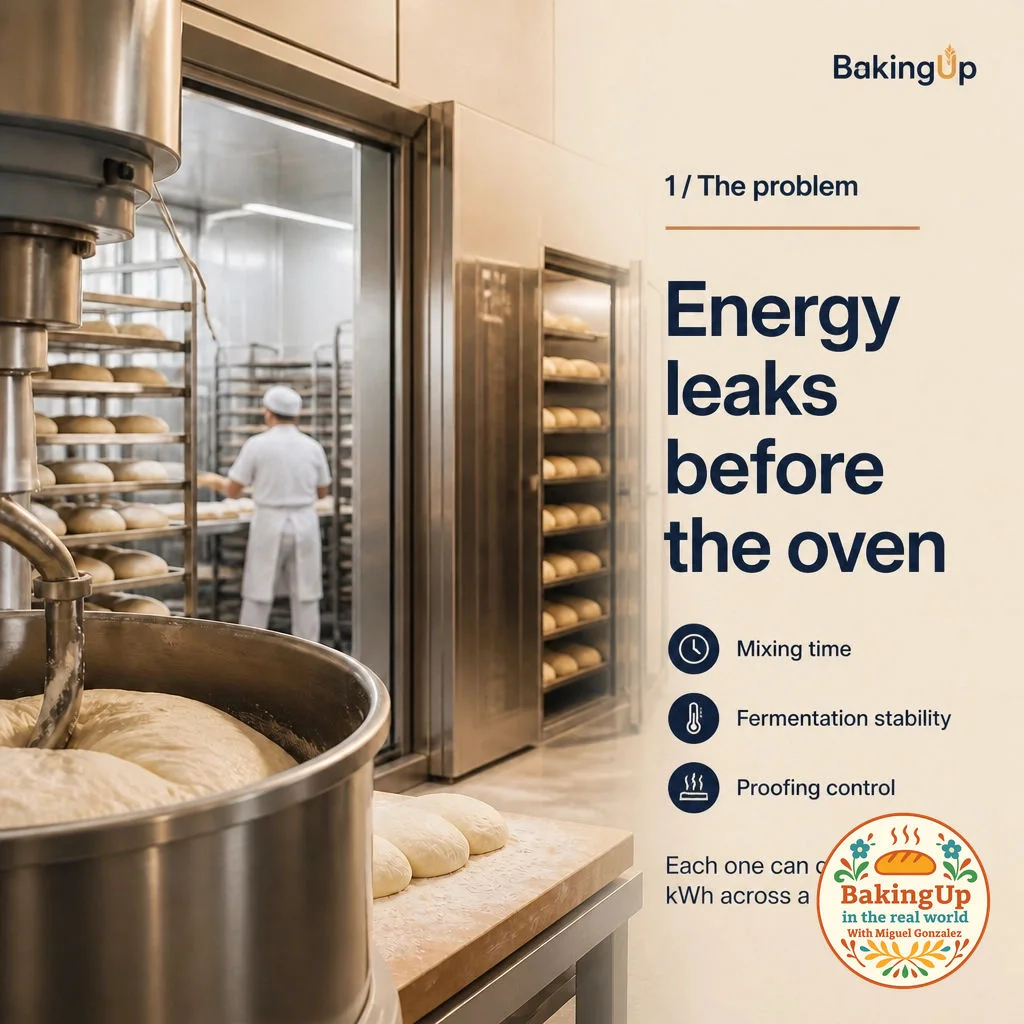
1. The problem
At industrial scale, energy audits often stop at oven temperatures. But kWh are also being consumed upstream: mixers running longer than necessary, fermentation drifting into hold time or rework, and proofing equipment compensating for inconsistent dough. Across a shift, small losses can compound.
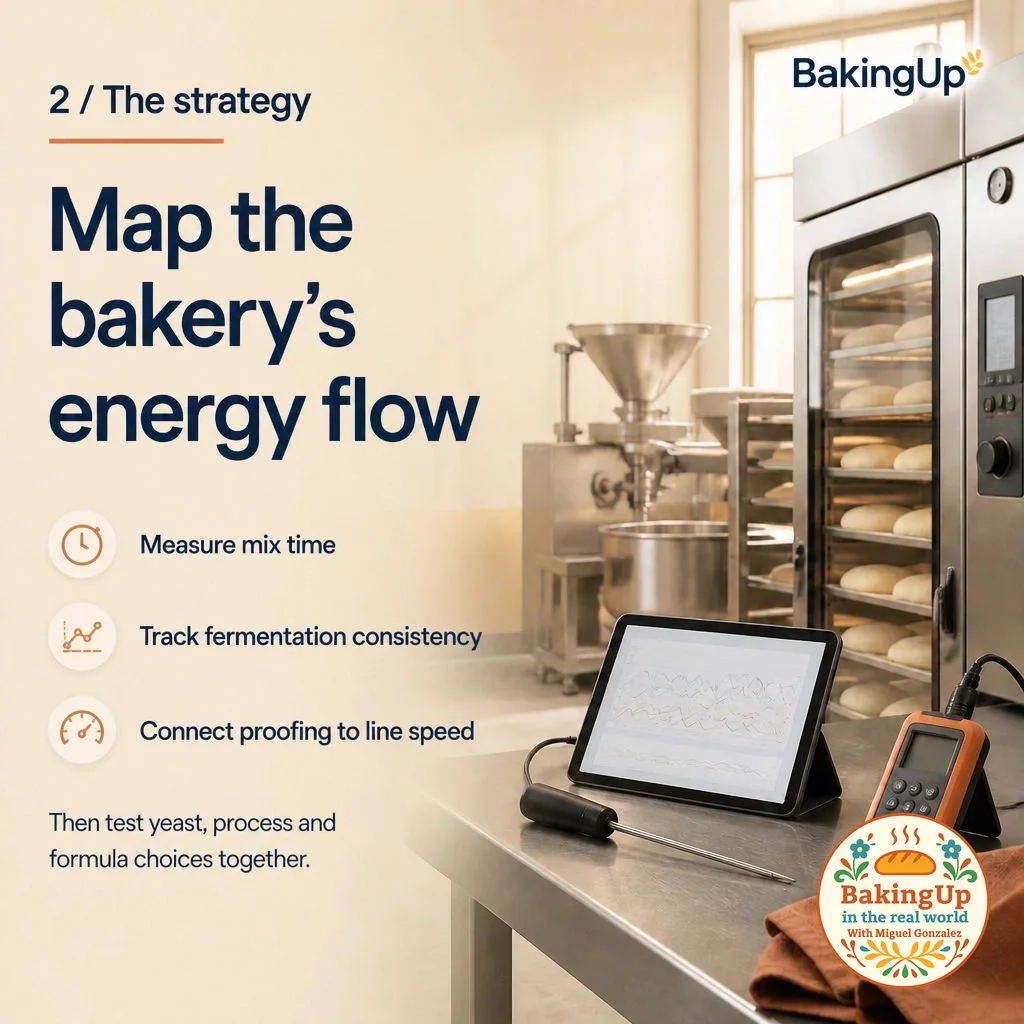
2. The strategy and implementation
Build an energy map of the bakery. Measure mixer minutes per batch, dough temperature, fermentation variability, proofing dwell time, and line stops. Then test yeast selection, process conditions, and formula changes together. The goal is not simply faster production: it is stable dough that reaches the oven predictably.
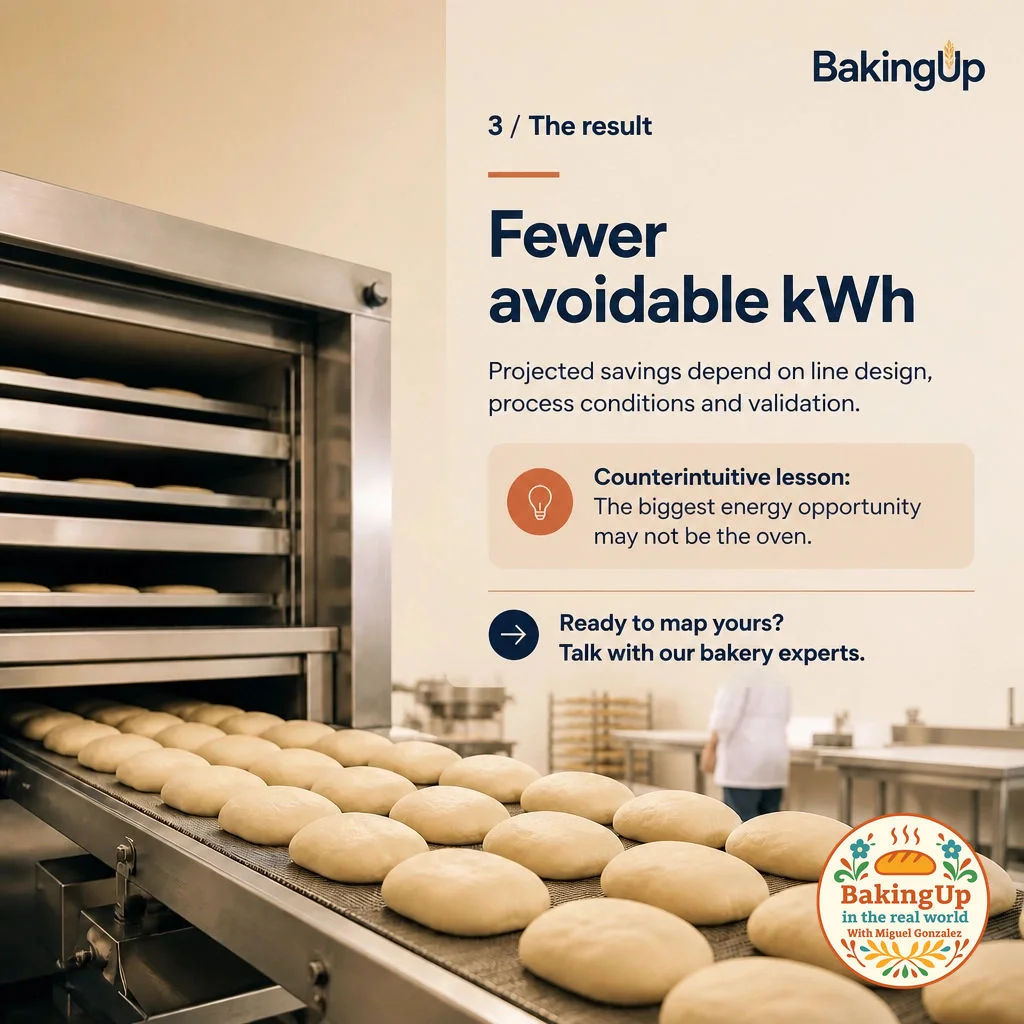
3. The results
A clearer view of where energy is actually going: and which changes are worth validating. Potential savings should be treated as projections, not guarantees, and confirmed through site-specific measurement, line trials, and production validation.
Counterintuitive lesson: the biggest energy opportunity may not be reducing oven temperature. It may be removing variability before dough ever reaches the oven.
Ready to map the hidden kWh in your operation? Talk with our bakery experts.